What if I gave you one technique that could save your life in many different scenarios that ended up killing many others over the years? All this technique requires is a little bit of knowledge and the situational awareness to use it when called for.
— James Albright
Updated:
2025-12-20
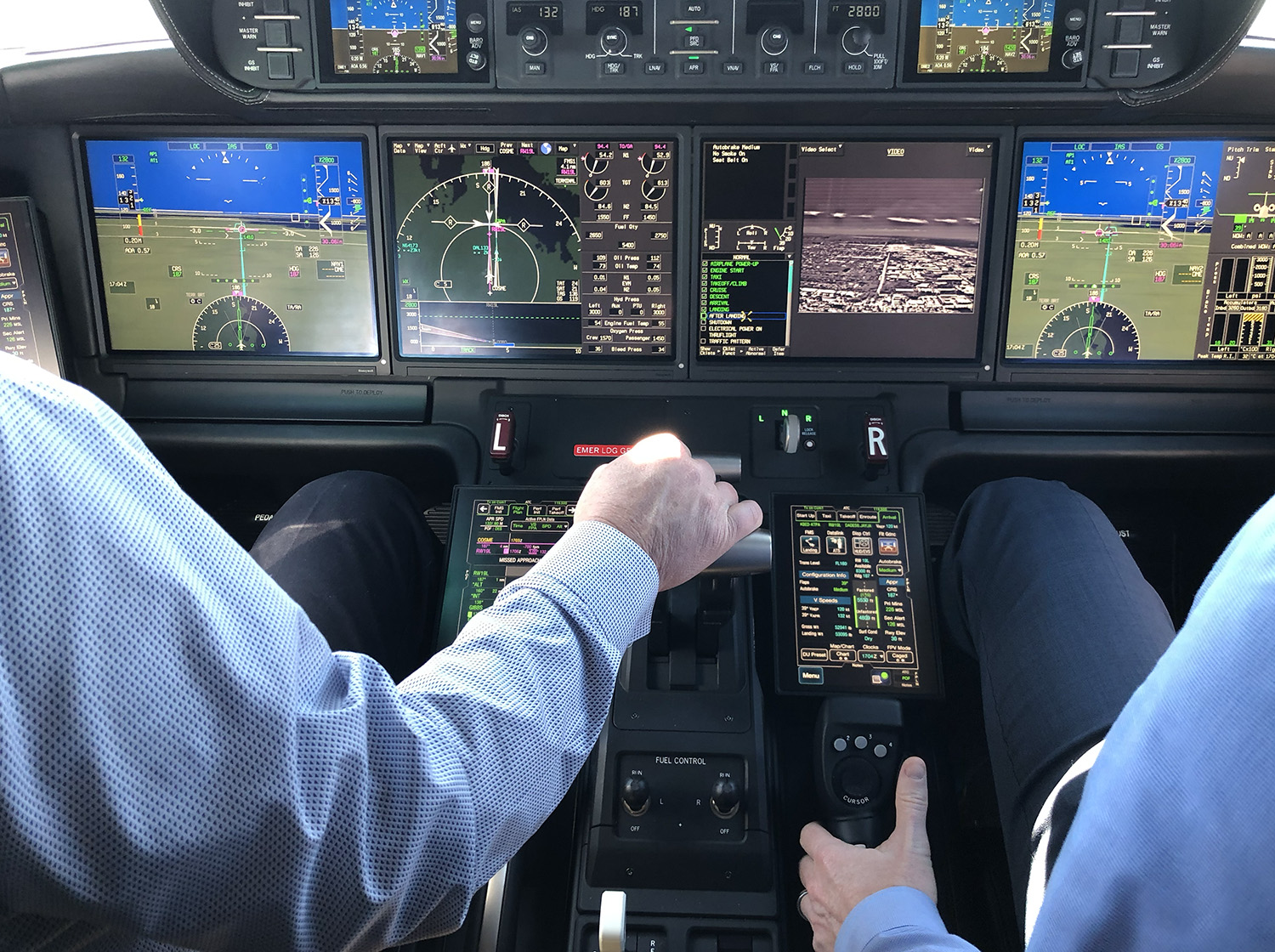
G500 on approach to KTPA
Okay, here it is:
- If you are in the airport environment, if you get in trouble, there is a known thrust and pitch setting that will get your aircraft safely climbing away from the ground until you can sort things out. In many aircraft, the answer is full thrust and a pitch of 15°, but your aircraft might be different. You should record your thrust and pitch setting about a thousand feet or so the next time you takeoff at, or close to, maximum weight. Memorize these values.
- If you are at high altitude cruise, if you get in trouble, there is another known thrust and pitch setting that will keep your aircraft from stalling until you can sort things out. If your engines are equipped with a Full Authority Digital Engine Control (FADEC), the answer is probably to push the thrust levers full forward and the pitch is probably between 2 and 3 degrees nose up. Once again, your aircraft could be different. You should take note of the correct values the next time you level off at cruise altitude after a maximum weight takeoff. You should memorize these values.
Seem too simple to be useful? There have been multiple cases over the years where this technique could have saved hundreds of lives.
If you are reading this in December 2025, there will be updates to this article every week this month, each detailing another example where this simple technique could have been a life saver.
Birgenair 301. Do you look into your pitot tubes to ensure they are free from obstructions? Or, can you? The pitot tubes on a Boeing 757 are over ten feet above the ground. In the Gulfstream GIV and G450, they about as high and require a ladder to inspect. Do you use pitot tube covers? Even if you are good about all this, the pitot tubes can still become blocked. Now what? The indications can be confusing and if you haven't thought this problem through ahead of time, your situational awareness will suffer.
AeroPerú 603. Same year, same aircraft type, same continent. But this time it was the static ports. Once again, these static ports require a ladder to inspect. Once again, flying known thrust and pitch settings would have saved them.
Air France 447. As so eloquently said by William Langewiesche, "To put it briefly, automation has made it more and more unlikely that ordinary airline pilots will ever have to face a raw crisis in flight—but also more and more unlikely that they will be able to cope with such a crisis if one arises." Had the Pilot Flying done nothing, they would have lived. Had any of the pilots realized a pitch of 15 degrees nose high at 35,000 feet was wrong, they would have live.