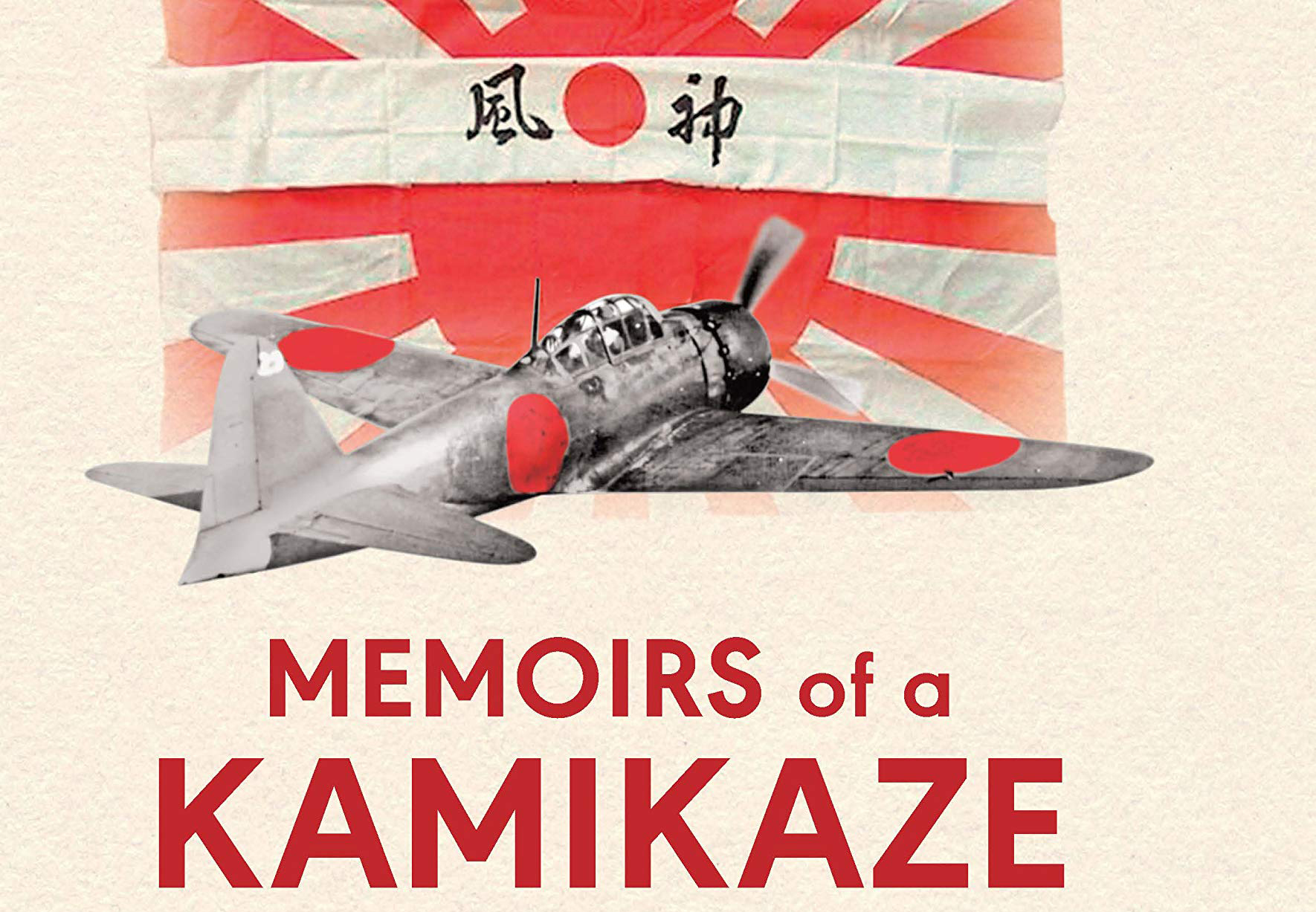
Most World War II history buffs can tell you about the terrible death toll exacted by Japanese suicide bombers, the "Kamikaze," towards the end of that war. The death toll was high, but the impact on the outcome of the war was low. It was a waste of humans on both sides. But what of those Kamikaze pilots? You might think there haven't been many biographies because a suicide pilot, after all, is dead. But that isn't always the case and the story of those who didn't die tells us a lot about that war and its aftermath. I've read a few of these biographies and autobiograhies. "Memoirs of a Kamikaze," by Kazuo Odachi, is my favorite.
— James Albright
Updated:
2026-10-01
Kazuo Odachi: Aspiring Pilot
Kazuo Odachi was born in 1926, in a country village called Kitano Kotesashi, not too far from Tokyo. He quickly grew to love the martial art of Kendo and won his first tournament in 1937. In that year, bayonet training was added to Kendo practice, illustrating how the nation was ramping up their war efforts in China. He writes that he and his friends would walk for an hour through fields and pastures to get to the Tokorozawa Army Aviation Training School, to watch airplanes.
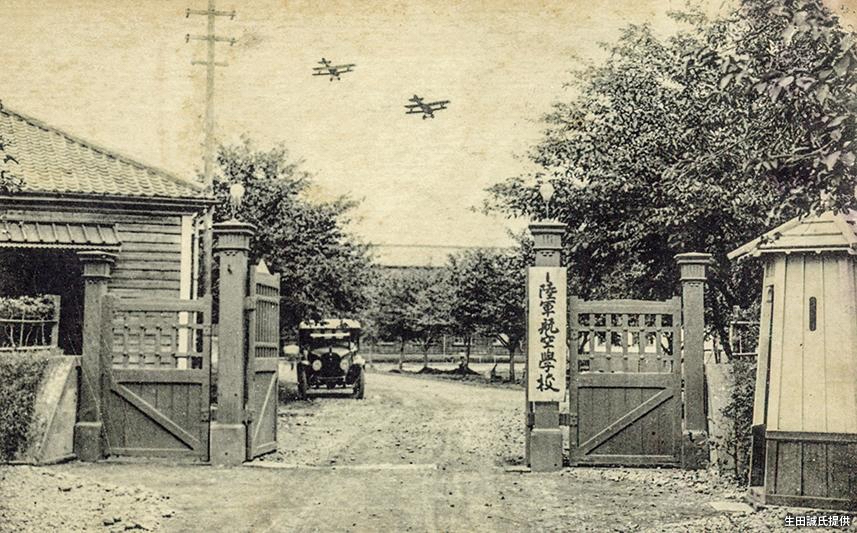
The main gate at the Tokorozawa Army Aviation Training School
He decided at that young age what he wanted to do. He writes:
“I was 14 on that fateful day of December 8, 1941 when Pearl Harbor was attacked. I heard the news on the radio. ‘Japan has declared war on America and Britain.’ Large families were common in those days. If there were three sons, the eldest was expected to remain and take care of family affairs, but the second and third sons were destined for the front. Knowing this, I was determined to enter the ‘Yokaren’ (Naval Aviator Prepatory Course), the elite preliminary training program for navy pilots. I wanted to fight for Japan in the sky.”
The Imperial Japanese Navy
At the age of 16, he joined the Imperial Japanese Navy with the specific ambition of becoming a pilot. Since he wasn’t from an elite class, he would do so as an enlisted pilot. Training included the Japanese language, mathematics, science, and the “Imperial Rescript to Japanese Soldiers and Sailors,” an introduction to Japanese martial spirit.
We pilots like to brag about how tough our training was, including the idea that “the beatings will continue until morale improves.” In the Japanese military of the day, officers were allowed to (and expected to) administer beatings on enlisted personnel. In fact, senior officers beat junior officers and senior enlisted beat the junior enlisted. In his chapter, “Training Hell,” which was indeed just that, Odachi recounts the ritual of having to prepare their hammocks for the night. “If the last one in our team took more than 18 seconds we would be scolded for our deplorable lack of enthusiasm and would have our backsides whacked three or four times with the trainer’s disciplinary baton dubbed the ‘Martial Spirit Bludgeon.’”
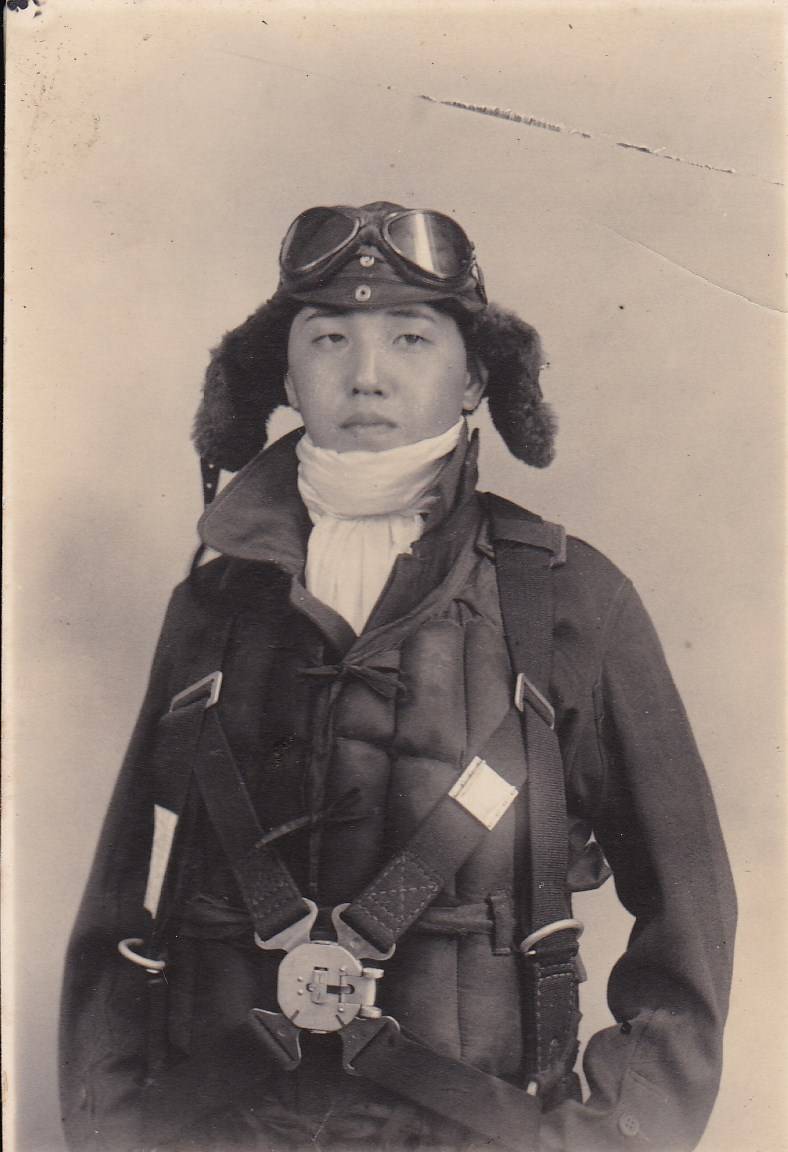
Odachi became a Mitsubishi A6M2 Zero fighter pilot just as the war was turning against that airplane. At Pearl Harbor, the Zero was considered a formidable match for the Grumman F4F Wildcat, American victories were due mostly to superior tactics, teamwork, and shooting, but the outcome usually favored the Japanese fighter. When defensive against an American fighter, for example, early Zero pilots used a corkscrew loop called “hineri-komi” to climb suddenly, out turn the enemy, and end up offensive. Odachi said the tide turned with the introduction of the Grumman F6F hellcat.
“They hunted in packs of four and avoided individual dogfights focusing instead on team battles. U.S. pilots researched our strategies thoroughly and formulated maneuvers to take advantage of our weaknesses.”
Perhaps more importantly, Japan was losing its experienced pilots in battle, replacing them with younger, untested pilots. Like Odachi. The tide had already turned when Odachi faced his American adversaries for the first time at Formosa in 1944:
“The wings of an F6F came into my sights. I knew that he was hunting me too. I was flying at 350 km/h and he at around 400 km/h. The Zero had two pairs of machine-guns on each wing. We were approaching each other at approximately 200 meters each second, so I was focused solely on getting the timing right for my burst. I would need to press the button at 500 to 600 meters out, and then veer away at the last second to avoid collision. I was ready to spray him the instant he showed his belly. I held my shot. “Not yet, not yet . . .” I fired and so did he. Passing each other by in a flash, it was too fast to get a look at his face. We got so close that I thought his propellers might cut into my neck. We were told never to hesitate at that moment, and just aim to carve the enemy with our own propellers.”
Of the 50 Zeros in this sortie, 17 did not return.
A few months later, after the Battle of Leyte Gulf, Odachi’s unit was called to a meeting where they were told, “We are running out of aircraft, and the time is approaching where our only recourse to victory is for each plane to be loaded with a bomb, and for you brave pilots to become one with your machines.”
Japanese Special Attack Corps
Odachi was “volunteered” into the ranks of the kamikaze. The term literally means a “divine wind” that was credited with saving Japan from two Mongol invasions. On both occasions, Mongol-led fleets were struck by storms that sunk much of each fleet and killed many of the enemy. Japanese folklore has it that God intervened to protect Japan. The Japanese Special Attack Corps for suicide bombers was given the kamikaze name in hopes they would save Japan as did those original divine winds. Starting in 1944, the Special Attack Corps flew nearly 3,000 kamikaze missions, sank 34 ships, damaged 368, and killed nearly 5,000 sailors. By the time Odachi became a kamikaze pilot, you could argue the war had already been lost.
“There was no way I could shoot down 80 American aircraft in the kind of dogfights Japanese pilots reveled in during the early days of the war. But, if I could dive into the elevator shaft of a carrier, then I could take out the ship, the 80 planes it carried, and its 4000 crewmen. That, I thought, would be my life well spent.
I knew from the outset that my duty was service to my country and emperor. Notwithstanding, I never truly harbored lofty thoughts of “dying for Japan” each time I sortied. I suspect my buddies didn’t either. We were all just reconciled to the fact that death was inexorable. We had an appointment with annihilation as it was our calling. My family and relatives were trying to get on with life back home, and if my sacrifice contributed to their wellbeing even in a small way, then there were no regrets. The only thing I desired was an honorable end to my life as an airman. As such, I did not leave a will and testament, nor did I write letters to my family. Few of us did.”
There was a bit of ceremony and ritual before each kamikaze mission. The night before came drinks and songs with comrades and often quiet contemplation. The last meal was usually of rice and red beans, a meal usually reserved for auspicious or celebratory occasions. The “rising sun” headband often associated with Kamikaze was indeed used, but not always. And, finally, there was a ceremonial drink of sake prior to engine start, not a “stiff drink” for courage, but a ceremonial farewell.
On Odachi’s first such mission, his formation was intercepted by American fighters, and his only option was to jettison his bomb and escape for another try. On his second attempt, his formation was unable to locate the enemy. Attempts three, four, five, six, and seven were a mix of bad weather, mechanical failures, and an inability to find the enemy. His final attempt was on August 15, 1945.
Odachi was in the front line of thirty Zeros, piloting the third Zero of the first section. The leader signaled departure and started to crawl forward:
“Taking this as my cue, I released the throttle and my Zero lurched into motion. At that very moment I noticed a vehicle hurtling toward us. A solider in a car seemed to be shouting, not that he could be heard over the howling engines. He made a big cross with his arms. Perplexed at the sudden intrusion, I stopped my Zero just behind the leader’s. ‘Abort attack!’ The vehicle slid to a halt in front of the principal Zero to block its path.”
The pilots were summoned to the command post where they listened to the unmistakable voice of the emperor. Japan had accepted total surrender.
Post War
Odachi returned to a society that had reversed its attitude toward the military almost overnight. Kamikaze pilots were publicly portrayed as heroic embodiments of self-sacrifice before the surrender. After the war, they were viewed with suspicion. “Why are you alive?” A man who returned could be thought of someone who failed to do wha his dead comrades had done. On his train ride home, he traveled through Hiroshima and saw first-hand what defeat had done to Japan. When he reached home, he took his ceremonial kamikaze sword and threw it into the hearth of a fire pit where it melted into a lump of steel.
Odachi applied for duty as a police officer where he listed his war time service as simply being a naval aviator. He served as a police officer for thirty-six years, never revealing his kamikaze past. He joined a Kendo group where he eventually revealed the secrets he had kept for nearly sixty years. “Memoirs of a Kamikaze” was first published in Japanese in 2016 and later in English in 2020.
As far as I know, Kazuo Odachi is living a peaceful retirement, now 99 years old. If you are a military history buff, especially one with an interest in aviation, I cannot recommend this book highly enough. Those of us who haven’t lived in such extraordinary times cannot fully appreciate how ordinary men, “Shomin” as they are called in Japanese, can rise to meet the challenges and survive.
Available now at: Amazon.